
A practical guide to the business models hiding behind familiar technology labels
A company can sell SaaS, operate a platform and run a marketplace at the same time. These terms describe different things, yet technology businesses often use them as if buyers should know what is meant. That creates a positioning problem: the label grows while the commercial explanation stays vague.
The distinction matters because a buyer evaluating software, a partner deciding whether to participate and a seller considering a marketplace are making different decisions. Each needs to understand who creates value, how value reaches them and what the company is responsible for. In our Platform marketing strategy guide, we argue that the model has to matter to the customer. This explainer makes the underlying labels easier to separate.
The short answer: SaaS is delivery, platform is a role, marketplace is an exchange
Software as a Service describes how software is delivered and operated. A provider hosts and maintains an application that customers access as a service. AWS’s SaaS definition captures this delivery model. The label tells you something about the software relationship, but little about whether other participants create value around it.
A platform describes a role in a wider system. It provides a core product, infrastructure or set of rules that lets customers, developers, partners, suppliers or other participants create additional value. A platform may be delivered as SaaS, installed software or a combination of services and technology.
A marketplace is a particular kind of platform that helps distinct groups find one another and transact. It needs enough relevant supply and demand, plus the mechanisms that make an exchange credible. A marketplace can be delivered through SaaS, but a SaaS product is not automatically a marketplace. Stripe’s comparison of marketplaces and platforms makes a related point: the categories can overlap, but the operating model and strategic choices differ.
A useful shorthand is this: SaaS answers “how is the software provided?”, platform answers “what can other participants do because it exists?” and marketplace answers “who is brought together to exchange what?”
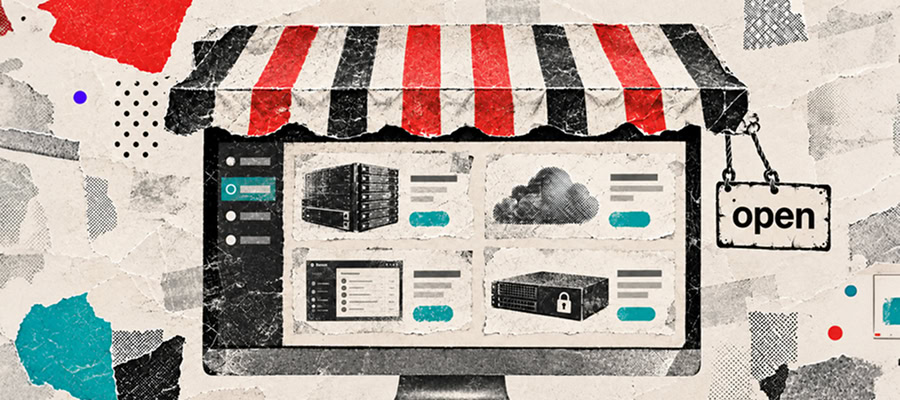
Platform vs SaaS vs marketplace: what changes?
| Question | SaaS | Platform | Marketplace |
|---|---|---|---|
| Primary question | How is the software delivered and maintained? | What can participants build, extend or accomplish around the core? | Who meets, what is exchanged and how is the transaction enabled? |
| Main value source | Useful software that customers can access as a service | A core capability made more useful by other products, people, data or services | A successful match and exchange between distinct sides |
| Key participants | Provider and subscribing customer | Core provider, customers and potentially partners or developers | Buyers and sellers, suppliers or service providers |
| Critical proof | Adoption, useful outcomes, reliability and service quality | Evidence that participation extends customer value | Evidence of relevant supply, buyer demand, successful matches and repeat transactions |
| Common risk | Selling access while leaving the business outcome unclear | Calling a product a platform before others can meaningfully participate | Promising choice or liquidity before both sides are active |
The table is a diagnostic, not a set of mutually exclusive boxes. A company might sell a SaaS product that becomes a platform through integrations, then add a marketplace where customers buy services from approved partners. The important question is which model creates the value the company is promising now.
Why the marketplace label causes extra confusion
The word marketplace is used for several different things. It might mean a directory of providers, a catalogue of third-party products, a procurement environment, a booking service or a system that supports the full transaction. These are not equivalent propositions. Discovery without a transaction is not the same customer promise as selection, contracting, payment, fulfilment and dispute handling in one place.
Amazon Business is a clear B2B example of marketplace mechanics. It connects business buyers with sellers and adds purchasing features such as business pricing, quantity discounts and invoice support. The offer has to work for both sides: buyers need an efficient procurement experience while sellers need access to relevant demand and workable commercial terms.
B2B buying also complicates the simple two-sided story. A user may research, a procurement team may set policy, finance may approve spend and a business unit may own the outcome. The marketplace has to fit a buying process, not just create a meeting between buyer and seller. In some categories, discovery and qualification matter more than instant checkout. In others, buyers expect quote requests, negotiated terms or integration into procurement systems.
That is why marketplace claims should specify the exchange. Does the service introduce parties, help them compare options, manage a transaction or take responsibility for fulfilment? The answer affects the product, the operating model, the partner proposition and what marketing can credibly promise.
How can you tell which model you actually have?
Start with the behaviour that creates customer value, not the company’s preferred noun. Ask what a customer can do, who else must take part and what improves when participation increases. Then look at the revenue model and operating responsibilities. Subscription revenue may indicate SaaS economics, but it does not settle whether the product is also a platform. Transaction fees may point to a marketplace, but only if the company enables an exchange between distinct sides.
Three practical tests help separate the models:
- The delivery test. Does the customer primarily pay for ongoing access to software the provider operates? That is a SaaS characteristic. Clarify what the provider hosts, updates and supports.
- The participation test. Can customers, developers, partners or suppliers extend the core offer in a way that creates additional value for others? If so, there may be a platform role. Name who participates and what they contribute.
- The exchange test. Does the product help distinct groups discover, agree or transact with one another? If so, it may operate as a marketplace. Identify the actual exchange and who carries responsibility for each step.
A company can pass more than one test. The tests reveal the layers of the model, not a single permanent identity. Our view on platform purpose and participation is that connections only become valuable when participants have a reason to use them.
What The Rubicon Agency sees in platform positioning
In our work with technology companies, we repeatedly see ambitious platform language arrive before the market has a stable way to understand the offer. Teams may be bringing products together, adding integrations, widening partner participation or packaging a service into technology. Buyers still need to know what has changed in their own work and which parts of the proposition are available today.
Our Fooji Fan Experience Management story involved clarifying a platform proposition for brands, sports teams and entertainment properties, then carrying that positioning through product and sales materials, the website and partner communications. The commercial task was to make the experience management offer legible across audiences and touchpoints. The decision was to give B2B buyers a shared point of understanding for the common technology, AI and tech stack behind virtual, physical and hybrid fan experiences: the platform was the foundation connecting those propositions.
With First Resonance, the challenge included articulating an evolving industrial platform and its components in the context of modern manufacturing. The story also had to explain how its platform worked alongside the wider Industry 4.0 stack, including MES, ERP, SCM, CRM and QMS, so buyers could understand its role among the systems used across manufacturing operations. These examples do not prove that every platform follows the same path. They do reinforce a practical lesson: clarity depends on explaining the offer’s role in a customer’s world, not adding “platform” to the headline.
This is also why we avoid treating platform as a synonym for scale. A product may be technically extensible but have few active integrations. A marketplace may have many listed suppliers but little completed business. A connected service may create a stronger outcome while remaining dependent on expert delivery. The language should reflect the working model buyers will experience.

What should marketing say?
Build the story from the buyer’s problem to the model’s specific contribution. Explain who uses the offer, who else participates, what changes in the workflow or commercial outcome and what the company takes responsibility for. If capabilities are planned rather than available, make that distinction visible.
The most useful message often combines a precise category with an outcome. “A procurement marketplace for specialist maintenance parts” tells a buyer more than “an AI-powered industrial platform”. “SaaS for managing partner onboarding” clarifies the delivery and the job. “A platform for coordinating compliance evidence across suppliers” starts to identify the participants and the work being enabled.
Then match evidence to the claim. A demonstration can show workflow. Adoption data can show use. Case evidence can show an outcome. Partner participation can support an ecosystem claim, while completed exchanges and repeat use are more relevant to marketplace performance. One proof point cannot carry every part of the story.
Our top tips
- Use the label that explains the buying decision. Say SaaS when hosted software access matters, platform when participation extends value and marketplace when an exchange is central.
- Describe the participants and their exchange. Name who contributes, who benefits and what each party can do through the offer.
- Separate capability from maturity. Show what customers and partners can use now, what is being tested and what remains a future ambition.
- Make operational responsibility visible. Explain who supports users, manages quality, handles transactions or resolves problems across the model.
- Choose evidence that fits the promise. Use customer outcomes for results, active participation for ecosystem claims and completed exchanges for marketplace claims.
The label is a shortcut, not the strategy
SaaS, platform and marketplace are not rival answers to the same question. One describes a service and delivery model, one describes a role in a wider value system and one describes a form of exchange. Companies can combine them, but buyers still need to understand which part matters to their decision.
The useful test is not whether the business sounds more ambitious with the word platform. It is whether customers and participants can see what the model enables, how it works and why it is worth joining. The label should make that explanation shorter. If it makes the buyer ask more questions, the strategy needs more work.
For the broader commercial choices behind that work, read our Platform marketing strategy guide and the related SaaS marketing strategy guide.
By The Rubicon Agency
Want to boost your budget?
The Rubicon Agency Budget Booster is designed to optimise funds – making your available $/£/€ go 15% further than it would have done previously.
Think of it as 15% extra – free of charge.
Get in touch with our team
From brand transformations to demand engines, we help ambitious B2B companies achieve extraordinary results.
Discover how The Rubicon Agency can solve your toughest marketing challenges.